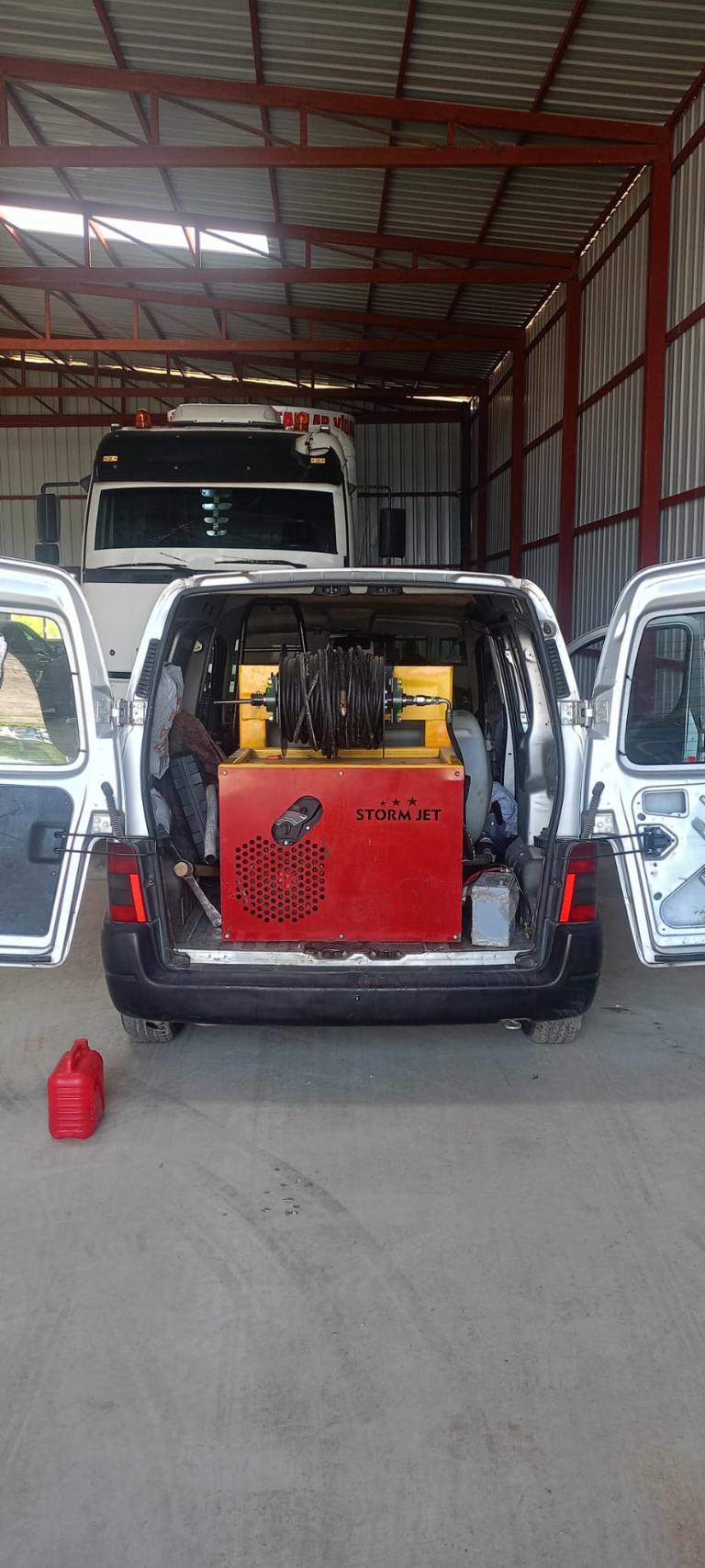
We use the carrying power of high-pressure water to remove grease, sediment, and residue from pipe surfaces and support the sewer line’s flow capacity.
- Pressurized pipe-surface cleaning
- Treatment of grease and sediment buildup
- Controlled flow testing
How does a water jet system work?
Water jetting sends pressurized water into a sewer line through a specialized hose and nozzle. Rear-facing jets help propel the hose through the pipe while lifting grease, sediment, and soft deposits from its inner surface.
Pressure, nozzle type, and travel speed must be adjusted for the line’s diameter and condition. Uncontrolled high pressure is not suitable for every pipe, so an initial assessment is important for old lines or those suspected of damage.
When is water jetting preferred?
Greasy deposits can spread along pipe walls in restaurant kitchens, shared lines, and drains carrying a high grease load. Water jetting may suit these cases because it helps transport buildup along the line rather than merely making a small opening at one blocked point.
Water jetting alone may not be right for a solid foreign object, collapsed pipe, or structural connection fault. The method is selected only after considering the symptoms and the line’s physical condition.
- Shared lines with grease and soft sediment
- Controlled cleaning of long pipe surfaces
- Systems with an appropriate discharge point
What is checked after the service?
We observe whether test water moves continuously, whether waste accumulates at the chamber or outlet, and whether nearby drains remain free of backups. Removed material must not be left in the area, and access covers must be closed securely.
Businesses with heavy grease loads can preserve the results longer by keeping waste oil out of drains, checking grease-control systems regularly, and reporting changes in flow early.
Frequently asked questions
Can water jetting be used in every sewer line?
No. Pipe material, age, diameter, access, and structural condition must be assessed. A different method may be selected for damaged or unsuitable lines.
Does water jetting remove grease buildup?
With an appropriate nozzle and pressure, it can help remove greasy, soft deposits from pipe walls. Results depend on the nature of the buildup and condition of the line.