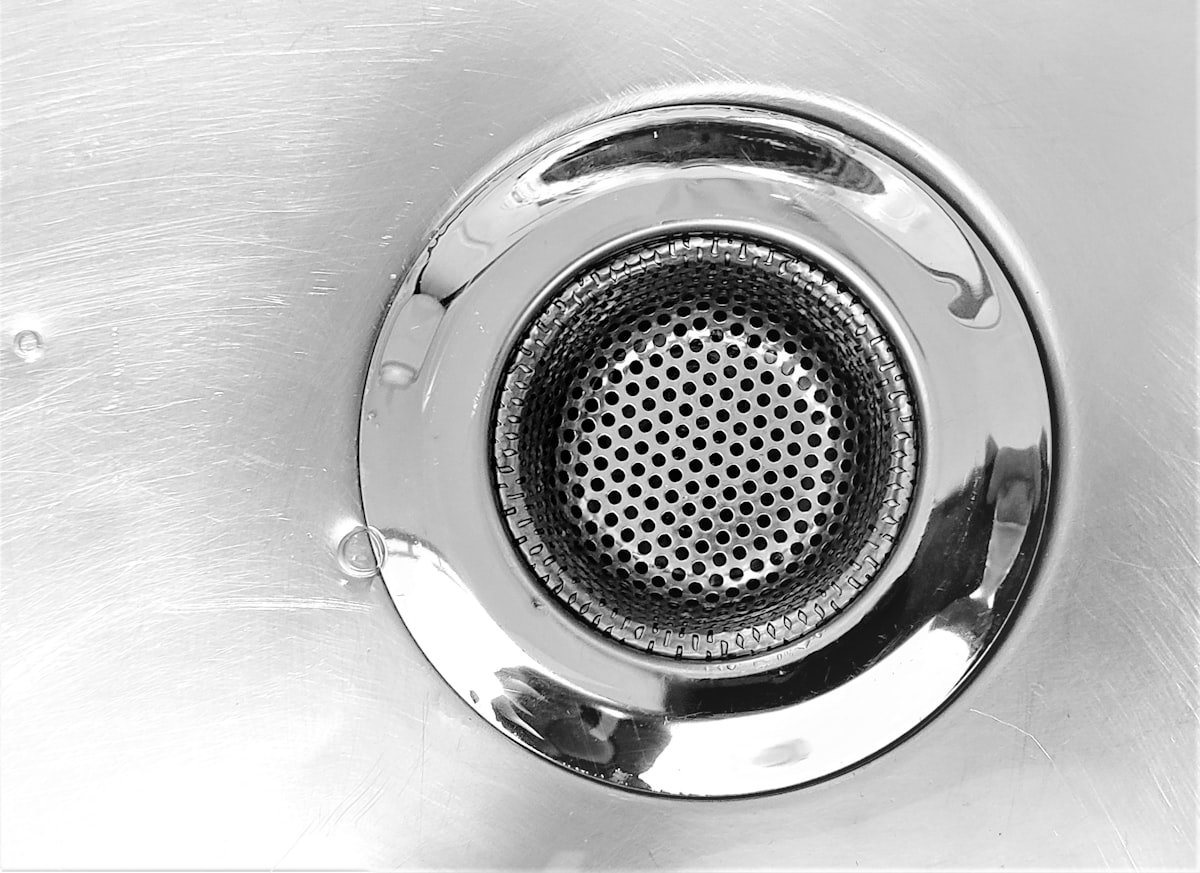
Separate grease and solid waste in the kitchen
Instead of pouring oil from pans and pots into the sink, allow it to cool and collect it in a sealed container for appropriate disposal. Scrape food scraps from plates into the bin before washing them. These habits prevent large particles from reaching the strainer and stop grease from coating the inside of the branch drain.
Coffee grounds, tea leaves, flour, and rice can combine with water and fats to form a dense layer. None belongs in the sink. Empty the strainer after use rather than washing captured material through its holes. A fine strainer is inexpensive, but it works only when it is cleaned and seated correctly.
- Collect waste oil in a separate container
- Scrape plates before placing them in the sink
- Use a fine-mesh drain strainer
- Never pour coffee grounds down the drain
Reduce hair buildup in the bathroom
Hair combines with soap and personal-care products to make a durable mesh inside bathroom plumbing. Hair catchers in sink and shower drains intercept much of this material before it enters the trap. Remove visible buildup regularly while wearing gloves, and place it in household waste rather than rinsing it away.
Do not push debris around the drain cover inward with a rigid object. This moves the obstruction beyond easy reach and may scratch a fitting. Responding when the sink first slows makes it less likely that buildup will travel deeper, compact at a bend, and require a mechanical drain-cleaning visit.
Take early warnings seriously
A noticeable increase in emptying time, gurgling, and intermittent odor are common first signs. Waiting until water no longer moves raises the risk of an overflow and makes the accumulated material more difficult to remove. Compare drainage under normal use rather than testing a suspect sink with an unnecessarily large volume of water.
A leak, loose fitting, or crack around the trap should not be treated as if it were only a blockage. Limit use and arrange suitable plumbing support. Moisture in the cabinet may damage stored belongings and panel materials, while sewer odors can also result from an empty trap or failed seal rather than obstructed flow.
Small weekly and monthly checks
Once a week, remove accessible strainers and clean away visible hair and food residue. Simply noticing how long the basin takes to empty is one of the easiest ways to recognize gradual change. Do not insert stiff wire, blades, or other sharp objects during cleaning, because they can damage seals or become lodged in the drain.
Once a month, visually check the trap and cabinet connections for moisture, drips, looseness, and odor. Do not dismantle a trap unless you understand how to reseal it correctly. Even a small leak can damage cabinet materials and be mistaken for a drainage symptom. Recording the check date helps show how quickly flow has changed and turns these ten practical actions into a consistent maintenance routine.